
10 Questions Home Buyers Should Ask Before Setting a BudgetOne of the first questions buyers ask when they start thinking about purchasing a home is:“How much house can I afford?”It

Dated: September 25 2026
Views: 0

One of the first questions buyers ask when they start thinking about purchasing a home is:
“How much house can I afford?”
It sounds like a simple question, but the answer is about much more than your salary.
Two Kansas City buyers earning exactly the same amount of money could comfortably afford very different homes.
One buyer may have a larger down payment and very little debt. Another may have car payments, student loans, credit card balances, childcare expenses, or other monthly obligations.
Then there are the expenses tied to the home itself.
Property taxes, homeowners insurance, HOA dues, mortgage insurance, interest rates, utilities, and maintenance can all affect what a home actually costs each month.
That is why I think buyers should ask two different questions:
“How much house can I qualify for?”
And more importantly:
“How much house can I comfortably afford?”
Here are 10 questions Kansas City home buyers should consider before setting their budget.

Your income is an important starting point, but it does not determine affordability by itself.
A mortgage lender will typically evaluate your income along with your debts, credit profile, down payment, loan program, and other financial information.
But there is another calculation that matters just as much:
Your own monthly budget.
Consider expenses such as:
• Car payments
• Student loans
• Credit cards
• Childcare
• Health insurance
• Utilities
• Groceries
• Transportation
• Retirement contributions
• Travel
• Entertainment
• Savings goals
Your mortgage payment has to coexist with the rest of your life.
A lender can help determine how much you may qualify to borrow.
Only you can determine how much you are comfortable spending.

This may be a better place to start than choosing a maximum purchase price.
Instead of immediately asking, “Can I afford a $400,000 house?” ask yourself:
“What monthly housing payment would I feel comfortable making?”
Your total monthly housing expense may include:
• Mortgage principal
• Mortgage interest
• Property taxes
• Homeowners insurance
• Mortgage insurance
• HOA dues
Then you still have expenses outside the mortgage payment, including utilities and maintenance.
This is why comparing homes based only on their asking prices can be misleading.
A lower-priced home with higher property taxes and HOA dues could potentially have a monthly cost similar to a more expensive home elsewhere.
Your existing debt can have a significant effect on mortgage qualification.
Lenders commonly evaluate your debt-to-income ratio, often called DTI.
This compares certain monthly debt obligations with your qualifying gross monthly income.
Those obligations may include:
• Auto loans
• Student loans
• Credit card payments
• Personal loans
• Other mortgages
• Certain recurring financial obligations
This helps explain why two people earning identical salaries may qualify for very different mortgage amounts.
Before shopping for homes, talk with a qualified lender about how your specific debts could affect your buying power.

Your down payment affects more than the amount of money you need at closing.
It can also affect:
• Your total loan amount
• Monthly principal and interest
• Mortgage insurance
• Available loan programs
• The amount of cash you have remaining after closing
A larger down payment can reduce the amount you need to borrow.
But putting every available dollar into your down payment may not be the right strategy.
Remember that you may also need money for:
• Closing costs
• Moving expenses
• Furniture
• Immediate repairs
• Appliances
• Emergency savings
• Home maintenance
You do not want to become a homeowner with no cash left.
The goal is not simply to make the largest down payment possible. It is to create a purchase strategy that makes sense for your overall financial situation.
Mortgage rates can have a major effect on purchasing power because they directly affect your monthly principal and interest payment.
Even a change in the interest rate can change the monthly payment associated with the same home price.
Your actual mortgage rate will depend on factors such as:
• Credit profile
• Loan type
• Down payment
• Loan term
• Lender
• Points or lender credits
• Current market conditions
This is why using an old mortgage rate you saw online may give you an inaccurate picture of affordability.
When you are actively shopping, ask your lender to show you payment scenarios using current rates.
You can also ask what happens to your payment if rates move higher or lower.
That can help you understand your budget before you fall in love with a home at the very top of your price range.
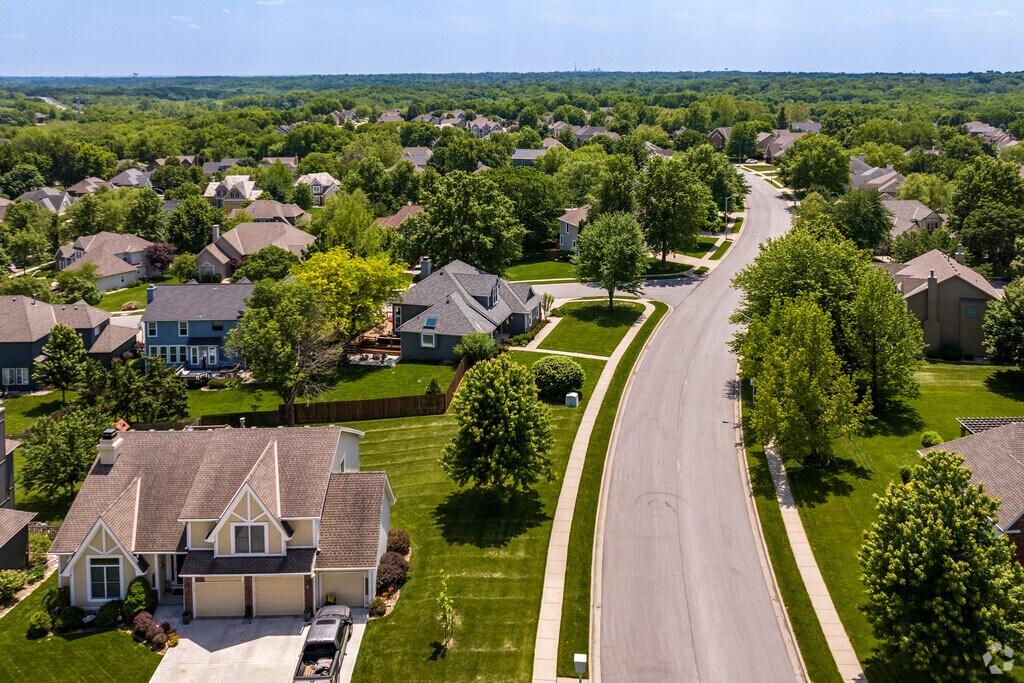
Property taxes deserve special attention when buying in the Kansas City metro.
Buyers may be comparing properties in different cities, counties, school districts, and even different states.
A home in Lee’s Summit may have a different tax situation than a similarly priced property in Overland Park, Leawood, Blue Springs, Liberty, or another part of the metro.
Do not assume two similarly priced homes will have identical property taxes.
When considering a particular property, look at its actual tax information and talk with your lender about how the estimated taxes could affect your monthly payment.
The important number is not simply the purchase price.
It is the total cost of owning that specific property.
Location can also dramatically change what your budget buys across the Kansas City metro. Buyers comparing neighborhoods should look beyond the asking price and consider taxes, commute, housing styles, amenities, and the characteristics that matter most to them.
Related: Best Neighborhoods to Buy a Home in Kansas City Right Now
https://www.yourkcseller.com/blog/565/+Best+Neighborhoods+to+Buy+a+Home+in+Kansas+City+Right+Now
Homeowners insurance is another expense buyers sometimes underestimate.
The cost can vary based on the property and insurer.
Factors may include:
• Property characteristics
• Coverage selections
• Deductible
• Replacement cost considerations
• Claims history
• Insurance company underwriting requirements
Instead of guessing, consider obtaining an insurance quote when you are seriously considering a property.
There is another important point to understand.
Having a fixed-rate mortgage does not necessarily mean your total monthly housing payment will never change.
Your principal and interest may remain fixed, but changes in property taxes or homeowners insurance can affect an escrowed monthly payment over time.
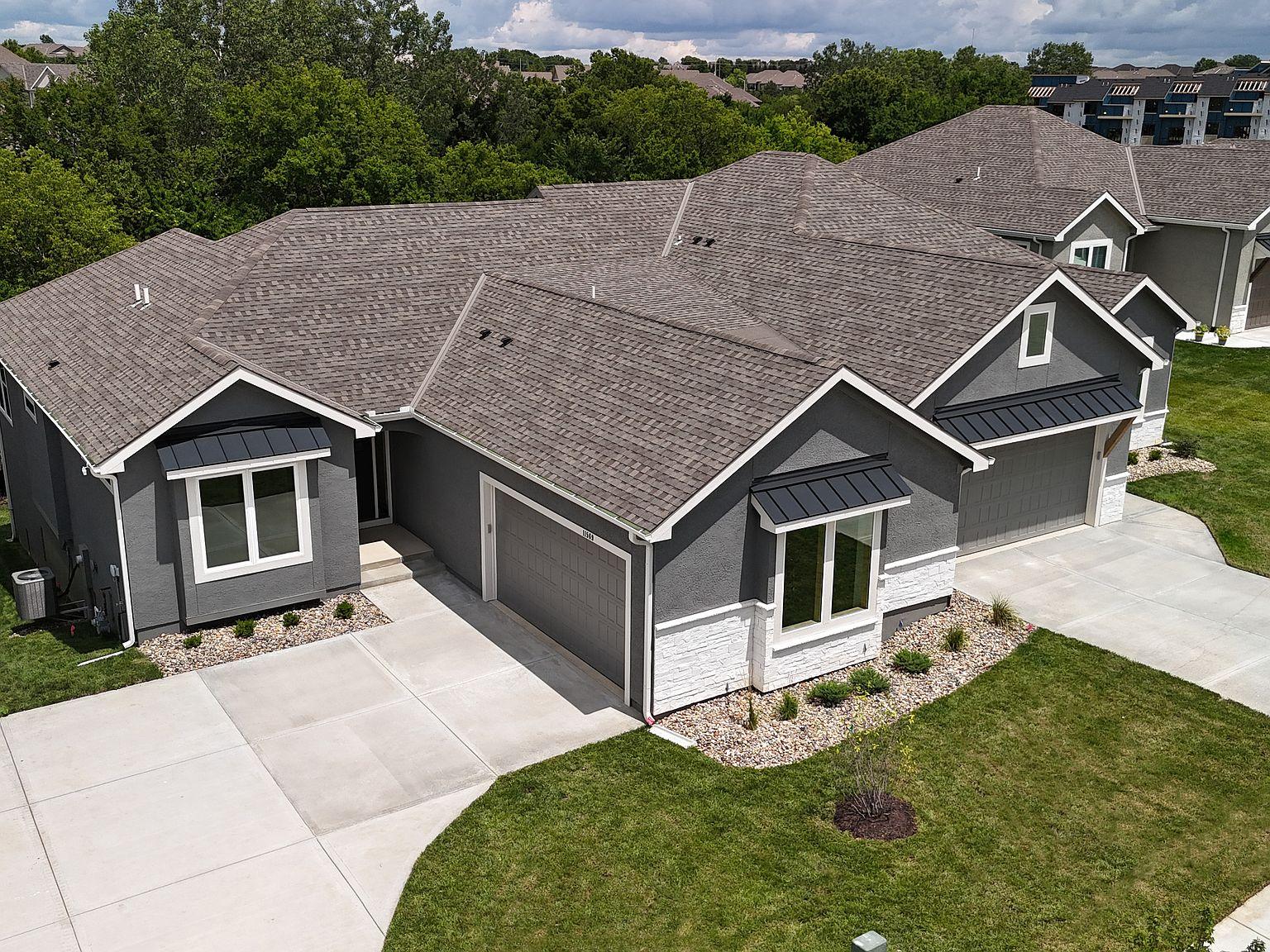
HOA dues should be included when calculating the cost of owning a particular home.
Imagine comparing two homes.
One has no HOA.
The other has monthly or annual association dues.
That additional expense should be considered when determining what you are comfortable spending each month.
You should also understand what the HOA fee covers.
Depending on the community, dues might contribute toward:
• Community amenities
• Lawn maintenance
• Snow removal
• Exterior maintenance
• Common areas
• Pools or clubhouses
• Other shared expenses
Coverage varies significantly between communities.
Buyers should also review available association documents for rules, financial obligations, and potential assessments.
Do not compare two homes based only on their sale prices when their ongoing ownership costs are different.

This may be the most important question in this entire discussion.
Mortgage qualification and personal affordability are not the same thing.
A lender evaluates whether you meet the requirements for a particular mortgage.
Your personal budget has to answer a different question:
“What kind of life do I want to have after buying this house?”
Maybe you want to travel.
Maybe you have children involved in activities.
Maybe you are aggressively saving for retirement.
Maybe you plan to purchase a vehicle.
Maybe you want money available to renovate the home.
Or maybe you simply do not want a large percentage of every paycheck committed to housing.
There is nothing wrong with purchasing below the maximum amount you are approved for.
Your pre-approval establishes your financing parameters.
It does not have to become your shopping target.
The mortgage is only part of the cost of homeownership.
Before deciding how much house you can comfortably afford, leave room for expenses that happen after closing.
Those may include:
• Utilities
• Routine maintenance
• HVAC servicing
• Lawn care
• Pest control
• Appliance replacement
• Plumbing repairs
• Roof maintenance
• Exterior maintenance
• Furniture
• Unexpected repairs
These expenses can vary considerably from one property to another.
A newer maintenance-provided villa and a 40-year-old house sitting on several acres may have completely different ownership costs.
The property's age, size, condition, lot, amenities, and mechanical systems all matter.
You are not simply buying a mortgage.
You are taking responsibility for that particular property.
I recommend starting with the monthly payment instead of the purchase price.
First, determine the monthly housing expense you would feel comfortable carrying.
Then talk with a qualified mortgage lender.
Have the lender evaluate your:
• Income
• Existing debts
• Credit
• Down payment
• Loan options
Instead of asking for only your maximum purchase price, ask for several scenarios.
For example:
“What would my estimated payment look like on a $350,000 home?”
“What about $400,000?”
“What about $450,000?”
Once you start looking at actual homes, you can incorporate property-specific taxes, estimated insurance, HOA dues, and other expenses.
That gives you a much more useful picture than relying solely on a generic online affordability calculator.
Not necessarily.
Imagine you are approved to purchase up to $500,000.
That does not automatically mean your home search should begin at $475,000 and end at $500,000.
Maybe the payment associated with a $425,000 home gives you significantly more financial breathing room.
That extra room could allow you to:
• Continue building savings
• Travel
• Make improvements to the property
• Handle unexpected repairs
• Invest for retirement
• Simply have less financial pressure every month
The goal should be finding the right combination of house and payment.
Not proving that you can reach the top of your approval.
Affordability is not only about the monthly payment.
You also need to consider how much cash you may need to complete the purchase.
Depending on the transaction and your financing, expenses could include:
• Down payment
• Lender-related costs
• Appraisal
• Inspection expenses
• Prepaid expenses
• Escrow funding
• Other closing costs
The exact amount varies by transaction.
You may also want cash remaining after closing.
Moving into a home and immediately discovering you need a refrigerator, lawn mower, furniture, repair, or another unexpected expense can quickly add to your costs.
One of the biggest differences between renting and owning is responsibility.
When you rent and the water heater fails, you generally contact the landlord.
When you own the home, that responsibility becomes yours.
That does not mean something will immediately break.
But eventually, every house requires maintenance.
Before stretching your budget to purchase a more expensive home, consider whether you will still have enough savings to handle an unexpected expense.
A house you can technically afford but cannot comfortably maintain can create financial pressure.
It is also worth considering which improvements may eventually add value and which are primarily lifestyle purchases. Not every renovation produces the same return when it comes time to sell.
Related: Home Updates That Actually Pay You Back When You Sell in Greater Kansas City

Do not compare only the listing prices.
Compare the entire ownership picture.
For example:
HOME A
Lower purchase price
Higher property taxes
HOA dues
Older HVAC system
HOME B
Higher purchase price
Lower ongoing expenses
No HOA
Newer mechanical systems
The lower-priced house is not automatically the less expensive home to own.
When you become serious about a particular property, ask your lender for a property-specific payment estimate.
Then look beyond the mortgage.
What does the inspection reveal?
How old is the roof?
How old is the HVAC system?
What does the HOA cover?
What will insurance cost?
Are major repairs likely in the near future?
That is how you begin comparing actual affordability instead of simply comparing asking prices.
There is no universal number that works for every Kansas City buyer.
Your comfortable price range depends on your finances and priorities.
Before deciding on your maximum budget, ask yourself:
Can I comfortably make this payment every month?
Can I continue saving?
Can I handle an unexpected home repair?
Can I maintain my current lifestyle?
Can I comfortably manage my other debts?
Will I still have emergency savings after closing?
Would the payment remain manageable if taxes or insurance increased?
If those questions make you uncomfortable, the home may be too expensive for your preferred lifestyle even if you technically qualify for the mortgage.

So, how much house can you afford in Kansas City?
The answer is not simply a multiple of your salary.
It is the combination of your income, debt, credit, down payment, mortgage rate, property taxes, insurance, HOA expenses, maintenance costs, cash reserves, and lifestyle.
That is why I recommend starting with the payment instead of the purchase price.
Figure out what monthly housing expense feels comfortable.
Get pre-approved.
Understand your financing options.
Then evaluate individual homes based on their actual ownership costs.
Most importantly, do not confuse your maximum mortgage approval with your ideal home-buying budget.
The goal is not to buy the most expensive house someone will finance for you.
The goal is to buy the right home at a payment you can comfortably live with.
Determining your comfortable home-buying budget is only the beginning. If you're preparing to purchase in the Kansas City area, these additional guides can help you plan your next steps.
Best Neighborhoods to Buy a Home in Kansas City Right Now
https://www.yourkcseller.com/blog/565/+Best+Neighborhoods+to+Buy+a+Home+in+Kansas+City+Right+Now
Debunking the 20% Down Payment Myth in Kansas City Real Estate
https://www.yourkcseller.com/blog/292/Debunking+the+20+Down+Payment+Myth+in+Kansas+City+Real+Estate
Home Updates That Actually Pay You Back When You Sell in Greater Kansas City

I’m Jason Rains, a Kansas City real estate agent with REMAX Elite REALTORS and the leader of Your KC Seller Team. I’ve had the opportunity to help over 300 families buy and sell homes across the ....
10 Questions Home Buyers Should Ask Before Setting a BudgetOne of the first questions buyers ask when they start thinking about purchasing a home is:“How much house can I afford?”It
The Kansas City luxury real estate market may be entering a new phase.For much of the past several years, limited inventory has shaped the luxury market. Buyers searching for the right combination
Selling your home this fall isn’t simply about putting a sign in the yard and waiting for buyers.Today’s Kansas City buyers may have more choices, affordability remains important, and
When most buyers picture a luxury home, they probably think about what they can immediately see.Custom cabinetry. Expansive kitchens. Architectural details. Beautiful flooring. Pools. Outdoor living
 The information displayed on this page is confidential, proprietary, and copyrighted information of Heartland Multiple Listing Service, Inc. (
Heartland MLS
). Copyright 2026, Heartland Multiple Listing Service, Inc. Heartland MLS and KC Seller Team do not make any warranty or representation concerning the timeliness or accuracy of the information displayed herein. In consideration for the receipt of the information on this page, the recipient agrees to use the information solely for the private noncommercial purpose of identifying a property in which the recipient has a good faith interest in acquiring. Data last updated on September 25, 2026 2:31 PM UTC
33. Required DMCA Notice
The Digital Millennium Copyright Act of 1998, 17 U.S.C. §512, the DMCA, provides recourse for copyright owners who believe that material appearing on the Internet infringes their rights under U.S. copyright law. If you believe in good faith that any content or material made available in connection with our website or services infringes your copyright, you (or your agent) may send us a notice requesting that the content or material be removed, or access to it blocked. Notices must be sent in writing by email to DMCAnotice@MLSGrid.com. The DMCA requires that your notice of alleged copyright infringement include the following information: (1) description of the copyrighted work that is the subject of claimed infringement; (2) description of the alleged infringing content and information sufficient to permit us to locate the content; (3) contact information for you, including your address, telephone number and email address; (4) a statement by you that you have a good faith belief that the content in the manner complained of is not authorized by the copyright owner, or its agent, or by the operation of any law; (5) a statement by you, signed under penalty of perjury, that the information in the notification is accurate and that you have the authority to enforce the copyrights that are claimed to be infringed; and (6) a physical or electronic signature of the copyright owner or a person authorized to act on the copyright owners behalf. Failure to include all of the above information may result in the delay of the processing of your complaint.
 All information deemed reliable but not guaranteed. All properties are subject to prior sale, change or withdrawal. Neither listing broker(s) or information provider(s) shall be responsible for any typographical errors, misinformation, misprints and shall be held totally harmless. Listing(s) information is provided for consumer's personal, non-commercial use and may not be used for any purpose other than to identify prospective properties consumers may be interested in purchasing. The data relating
to real estate for sale on this website comes in part from the Internet Data Exchange program of the Multiple Listing Service. Real estate listings held by brokerage firms other than KC Seller Team may be marked with the Internet Data Exchange logo and detailed information about those properties will include the name of the listing broker(s) when required by the MLS. Copyright ©2026 All rights reserved.
Last Updated: September 25, 2026 2:41 PM UTC
Show More...
All information deemed reliable but not guaranteed. All properties are subject to prior sale, change or withdrawal. Neither listing broker(s) or information provider(s) shall be responsible for any typographical errors, misinformation, misprints and shall be held totally harmless. Listing(s) information is provided for consumer's personal, non-commercial use and may not be used for any purpose other than to identify prospective properties consumers may be interested in purchasing. The data relating
to real estate for sale on this website comes in part from the Internet Data Exchange program of the Multiple Listing Service. Real estate listings held by brokerage firms other than KC Seller Team may be marked with the Internet Data Exchange logo and detailed information about those properties will include the name of the listing broker(s) when required by the MLS. Copyright ©2026 All rights reserved.
Last Updated: September 25, 2026 2:41 PM UTC
Show More...
